ServicesDual Tank Water Filtration
Lomita Dual Tank Water Filtration
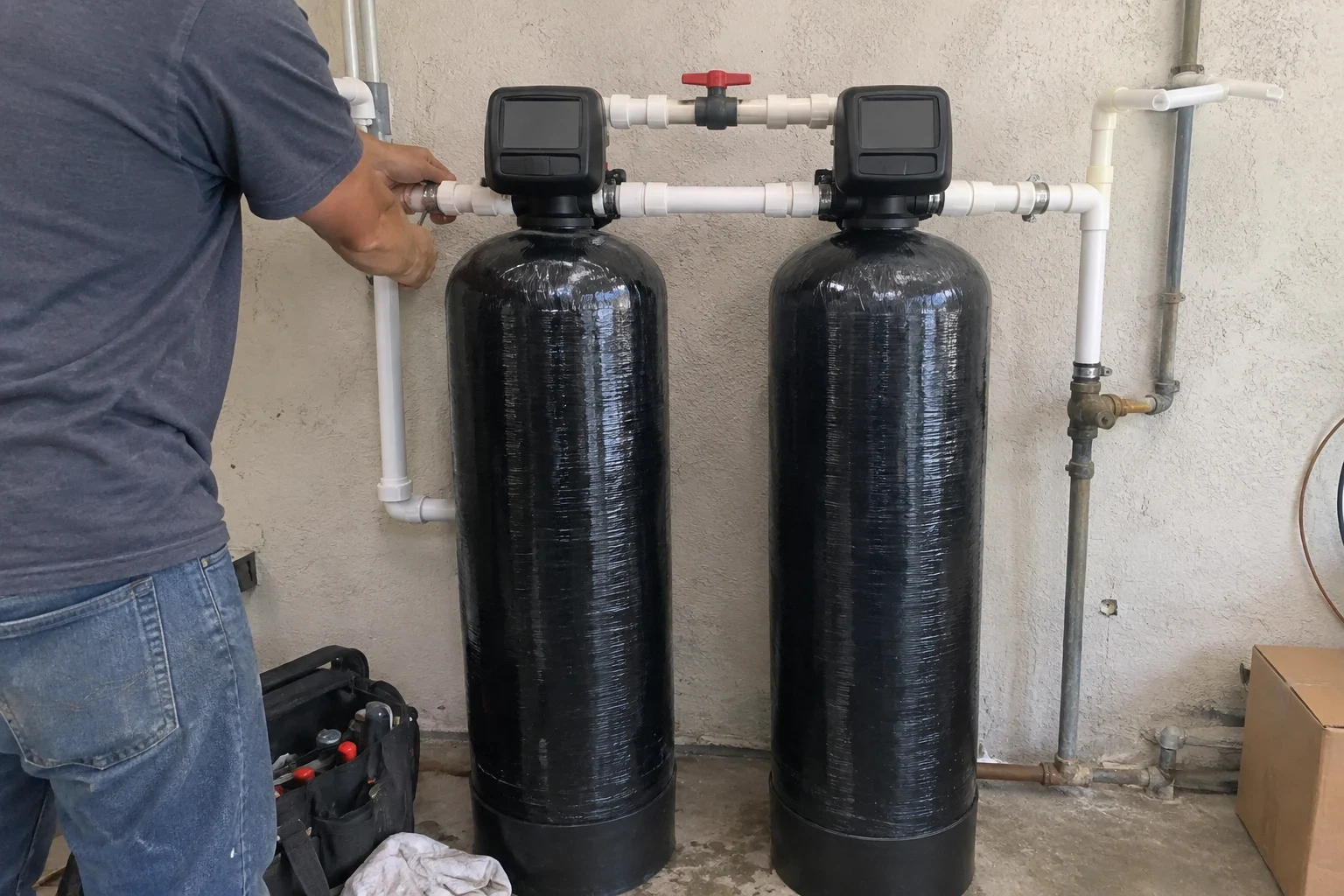
A dual tank system sits on the main line and treats the water for every tap in the house. Tank one removes the chlorine taste and odor. Tank two handles the minerals that crust up on fixtures. We install it, get it running and clean up before we go.
How a Dual Tank System Works
All the water in your house arrives through a single main line. The dual tank system is installed on that line, most often in the garage or beside the house where the pipe enters. Before it gets to a faucet, shower or appliance, the water passes through both tanks, one after the other.
Giving each tank its own task means both work better. Tank one is filled with carbon media that removes chlorine along with its taste and smell. Tank two goes after the minerals that form scale, so showerheads, glass doors and the inside of your water heater collect less buildup.
Choose it when you want better water from every tap, not only at the kitchen. If drinking water is all you care about, an under-sink reverse osmosis unit could be the easier choice. We'll tell you which fits during the first call.
What You Get With the Install
- 01
Main line inspection
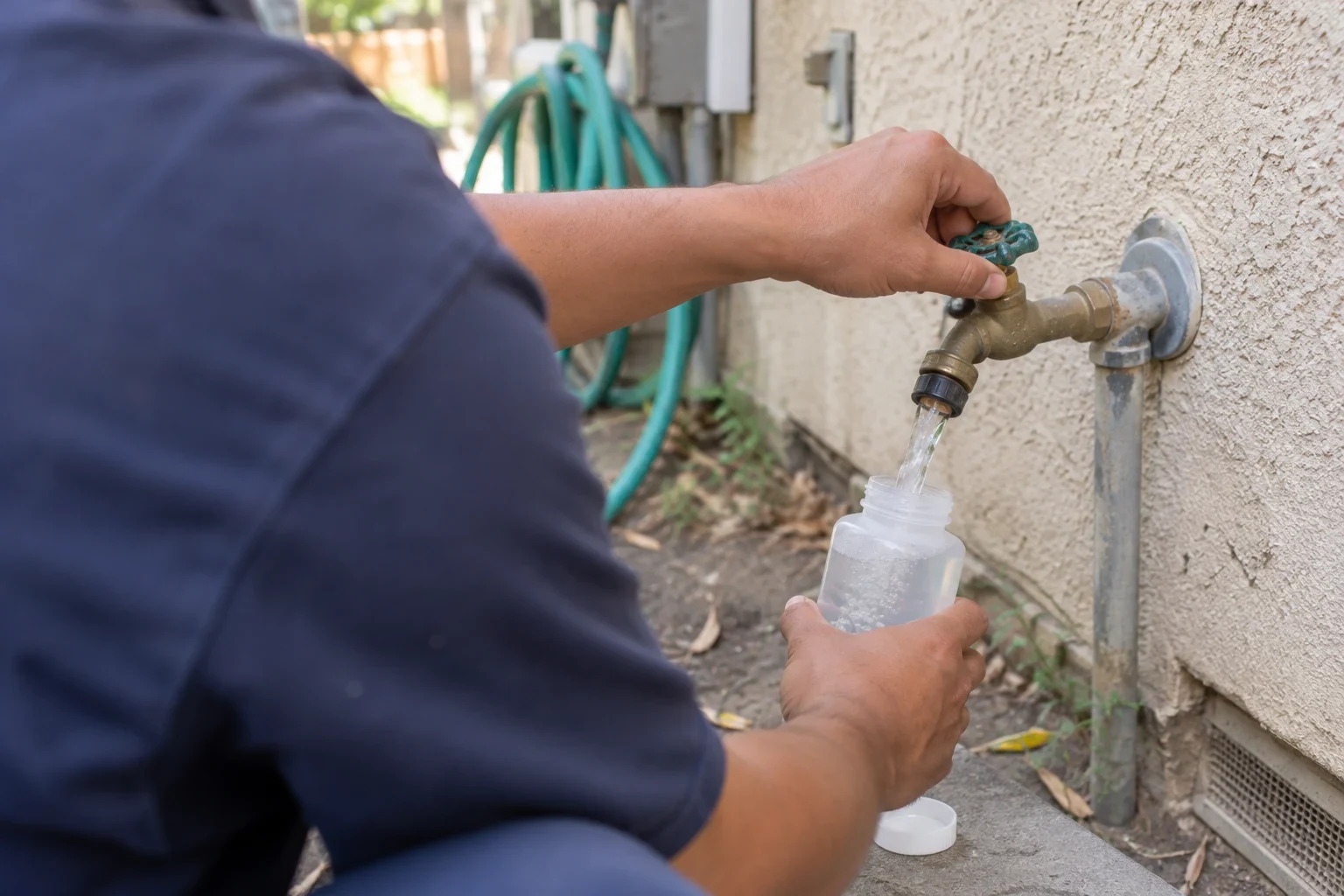
We find the spot where water enters your home, check the pipe material and measure the space around it. From that we know where the tanks will go and how we'll tie in.
- 02
Both tanks plus the control valve
You get a carbon tank, a mineral tank and the valve that runs them both. Tank size is set by how many people are in your home and how much water you go through each day.
- 03
A bypass for service
With the bypass, water can go around the system during service, so your faucets still work while it's being looked after.
- 04
Drain and power hookup
The system flushes itself on a timer, which means it needs a drain line and an outlet close by. We install both and run them cleanly.
- 05
First run and a walkthrough
We flush the fresh media, set the valve's program and check for leaks. Then you get a tour of the bypass and a rundown of the upkeep.
- 06
Free salt at install
Free salt goes into the tank at install, so the system is ready to work as soon as we finish.
Questions about Dual Tank Water Filtration?
Call(310) 620-1128Signs Your Home Could Use One
Water tastes or smells like a pool
That is chlorine from the treatment process. It is safe, but it puts a lot of people off drinking from the tap. The carbon tank handles it.
White crust on faucets and showerheads
Mineral buildup chokes spray patterns and makes fixtures look old fast. You end up scrubbing the same spots every week.
Spots on dishes and glass
Glasses come out of the dishwasher cloudy. Shower doors fog over with a film that does not wipe off easily.
You keep buying pitcher filters
A pitcher only covers a few cups at a time. If you are changing cartridges often and still showering in chlorinated water, treating the whole line saves effort.
Scale in the water heater or kettle
Rattling or popping from the water heater can mean mineral sediment at the bottom. A kettle with a crusty bottom tells the same story on a smaller scale.
How the Work Goes
- 1
The first phone call
You tell us what you are noticing at the tap. The same person you talk to stays your contact through the estimate, the install day and any questions after.
- 2
Planning the spot
We look at where your main line comes in and where the drain and outlet are. You get a clear plan for where the tanks sit and how the pipe gets routed before anything is cut.
- 3
Install day
We shut off the water to your home, cut into the main line and set the bypass and both tanks. Most of the day you will hear tools in the garage or outside, not in your living space.
- 4
Startup and testing for leaks
We turn the water back on slowly, flush the media until it runs clear and watch every joint. Then we program the flush cycle for a time when nobody is showering.
- 5
Cleanup and handoff
We haul off packaging and old pipe, wipe down the area and walk you through the bypass. You know who to call if anything comes up later.
What Moves the Price
Free install (we cover the cost), so the price comes down mostly to the equipment and your home's setup. We go over each part with you on the phone and before work starts, so there are no surprises on install day.
- Tank size
- A bigger household uses more water and needs more media. Larger tanks cost more but last longer between media changes.
- Where the main line enters
- An open garage wall is simple. A line buried behind a finished wall or in a tight side yard takes more parts and more routing.
- Pipe material and condition
- Copper and newer plastic pipe tie in cleanly. Older galvanized pipe may need a short section replaced so the connection holds.
- Drain and power distance
- If the nearest drain or outlet is far from the tanks, we run more line to reach it. That adds material to the job.
Questions About Dual Tank Systems
What's the difference between dual tank and single tank?
A single tank relies on one bed of media for every task. With two tanks, carbon in the first handles chlorine and the second handles minerals. Each bed lasts longer and does its work better. To compare other setups, see our Whole Home Water Filtration page.
Will the shower lose pressure once it's installed?
It shouldn't. Weak flow usually means the tanks are undersized for the home, forcing lots of water through too little media. We base tank size on the number of people in the house and the size of your main line, so your shower should feel much like it does today.
How much space do the tanks take up?
Plan on floor space roughly the size of a small closet, near where the main line enters. A garage corner works in most houses. We pick the exact spot while planning.
Will I need reverse osmosis for drinking too?
Not necessarily. Plenty of people drink straight from the tap once the chlorine taste is gone. Some prefer an added stage for drinking and cooking water, and an under-sink reverse osmosis unit runs fine alongside the dual tank system.
How much maintenance does it need?
Not much. The valve runs its own flush cycle on a timer. The media wears out gradually depending on how much water the house uses, and during the walkthrough we show you what to watch for.
Who do I call if there's a problem later?
The person who did your estimate and install. There's no handoff to a different office. Call the number on this page and you'll reach someone who already knows your setup.
See Whether a Dual Tank System Suits Your House
Tell us what's wrong with your water and about where the main line enters the house. We'll describe where the tanks would go and what makes up the price. Whoever answers is the person who handles the job to the end.