ServicesReverse Osmosis
Reverse Osmosis in Lomita
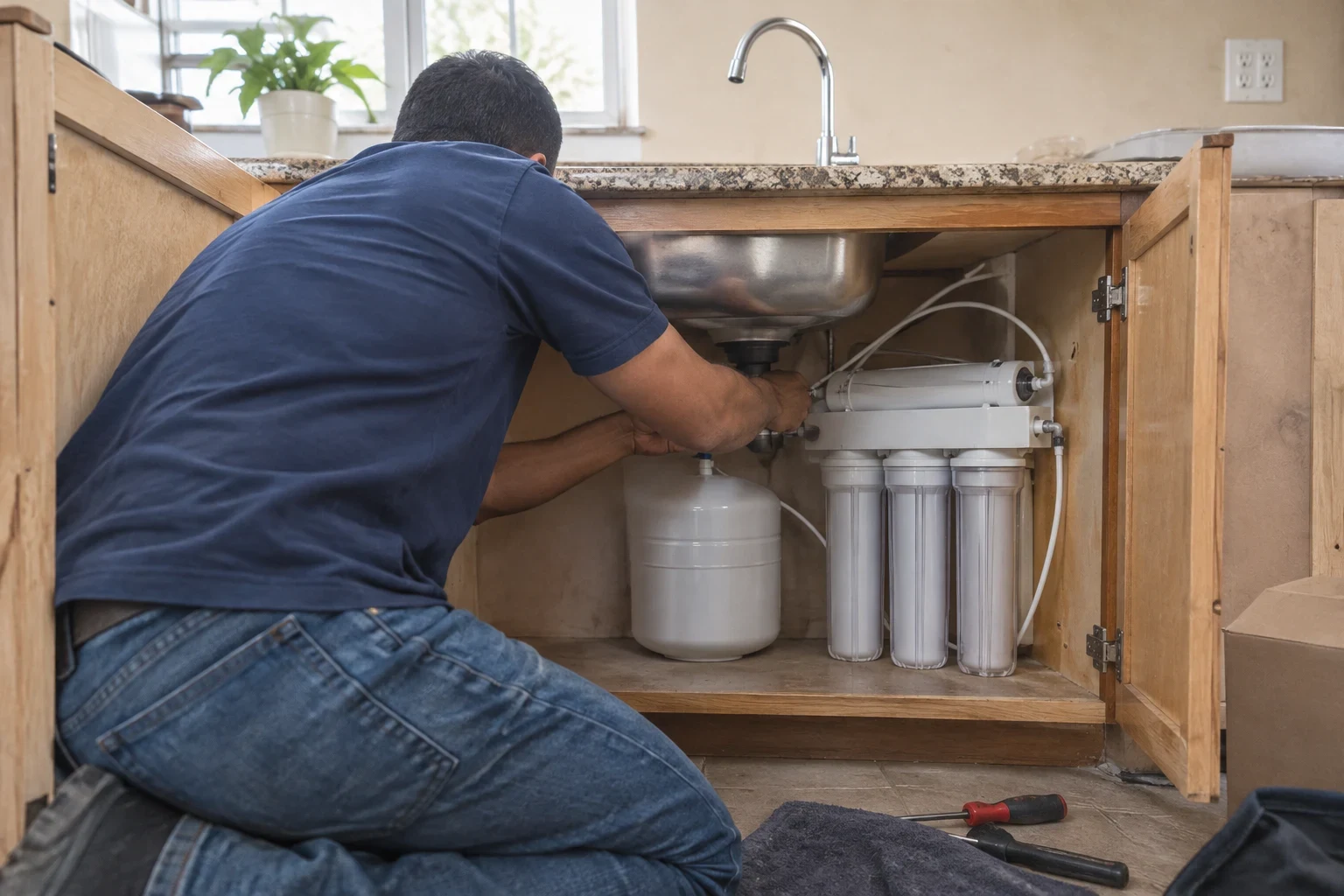
We install a reverse osmosis unit below your kitchen sink and give it a small faucet of its own, so you have clean water for drinking and cooking. One person explains the choices, books your install and checks every fitting before we head out.
What a reverse osmosis system does
A reverse osmosis unit forces water through a membrane with tiny pores. Most of what is dissolved in the water gets held back and flushed to the drain. You end up with clean water that tastes like nothing much, which is what you want in a glass, a pot of coffee or an ice tray.
This system works at a single tap, most often the kitchen sink. It does not treat water for the rest of the house. So it fits best when your concern is the water you actually drink. For treated water at every faucet, read our City Water Filtration and Dual Tank Water Filtration pages.
You have one contact the whole way, from your first call until we flush the new tank. That person knows your kitchen and remembers exactly what you were told.
What comes with the install
- 01
Prefilters
Water hits a sediment cartridge first, which catches sand, grit and flakes of scale from the pipes. A carbon cartridge comes next and takes out chlorine and stale flavors. Both protect the membrane so it lasts longer.
- 02
The RO membrane
The membrane does the heavy lifting. Its fine layers hold back most dissolved salts and minerals, along with metals such as lead, and send them to the drain.
- 03
Storage tank and postfilter
Clean water fills a small pressure tank under the sink, so you get an even flow when you open the faucet. A final carbon cartridge polishes the taste on the way out.
- 04
Dedicated faucet
The treated water comes out of its own faucet, set on the sink deck or the counter. If you have a sprayer hole you never use, we can often put it there.
- 05
Water and drain connections
We add a shutoff valve on the cold line and a saddle fitting on the drain pipe. These are real plumbing connections, made tight so the cabinet stays dry.
- 06
Optional fridge line
If you want clean water and ice from the refrigerator as well, we run tubing from the unit to the fridge.
Questions about Reverse Osmosis?
Call(310) 620-1128When an under-sink RO unit is worth it
Cases of bottled water keep piling up
You pay for them, store them and carry them in from the car. An RO faucet gives you the same kind of water right at the sink.
Your water smells like chlorine
Water systems use chlorine so the water stays safe in the pipes. Many people can taste it, and it stands out most in a plain glass or a cup of tea.
Chalky buildup in the kettle
Minerals in tap water dry into a white film in kettles and coffee makers. RO water leaves far less behind.
The pipes in your home are not new
A lot of homes in the area still have their original plumbing. If you are not sure what is in the walls, RO gives your drinking water an extra layer of protection.
A pitcher filter is not enough anymore
Pitchers refill slowly, and it is easy to forget the cartridge. For a family that drinks a lot of water, an under-sink unit keeps up much better.
How the job goes
- 1
A phone call first
You tell us about your kitchen, how much water you use and whether you want a fridge line. We answer your questions and give you your quote by phone.
- 2
A look under the sink
We check the space, the cold line, the drain and the countertop. If a garbage disposal or a tight cabinet changes the layout, we tell you before any work starts.
- 3
Install day
We shut off the cold water, add the feed valve and drain fitting, and mount the filters and tank. Then we set the faucet. We lay down a towel and keep the work area under the sink tidy.
- 4
Flush and check
The first tank of water gets flushed to clear the new filters. We check every fitting for drips and let the tank refill.
- 5
Cleanup and a quick lesson
We haul away packaging and wipe down the cabinet. You get a short rundown on filter changes, and you know who to call with questions later.
What sets the price
No two kitchens are set up the same, so your price comes down to your sink and the unit you choose. We offer free install (we cover the cost), which means your money goes mostly toward the equipment. On the phone we walk through every piece of the quote with you.
- Which unit you pick
- Simpler units run fewer stages. Some models add a stage that returns a small amount of calcium and magnesium so the water tastes less flat. A larger storage tank raises the cost too.
- What your counter is made of
- Laminate is quick to drill for the faucet. Granite and quartz need a slower bit and more care, so they take longer.
- Pressure at the tap
- The membrane works best with steady pressure. When a home runs low, we may add a small booster pump.
- Added lines
- A run to the refrigerator or a second drinking tap means more tubing and more fittings.
Common questions about reverse osmosis
Does reverse osmosis send water down the drain?
Some, yes. That water rinses away whatever the membrane caught, which keeps the membrane from clogging. Current units drain far less than older designs. If you're looking at a particular model, ask us for its drain ratio and we'll tell you the number.
How often are the filters replaced?
For most households, the prefilters and postfilter get changed about once a year. Kitchens that use a lot of water may need it every nine or ten months. The membrane holds up longer, typically a few years. We show you how to do the change on install day, and if questions come up later, you call the same person you've worked with all along.
Can it go under a sink with a garbage disposal?
Usually, yes. We can set the tank off to one side and hang the filter housings on the cabinet wall, keeping the disposal clear. If the cabinet really is too tight, you'll hear it from us when we check under the sink, well before install day.
Will RO remove minerals from my water?
It removes most of them, and plenty of people like the clean, plain taste that results. If you'd rather have some minerals back, we can put a remineralizing stage after the membrane.
How long is the install?
A few hours in most kitchens. A stone countertop to drill or a fridge line to run makes it a bit longer. The water is only off while we're making the connections.
Let's talk about your drinking water
Give us a rundown of your kitchen and how much water your family goes through. We work in Lomita and around Torrance and Carson, and the same person stays with you from your first question to the last leak check.