ServicesWell Water Filtration
Well Water Filtration in Lomita
Sand, iron and a sulfur smell can all ride up from a private well into your home. We fit filters to what your well sends up and to the flow your pump puts out. The same person who answers your questions also schedules the crew and checks the finished work.
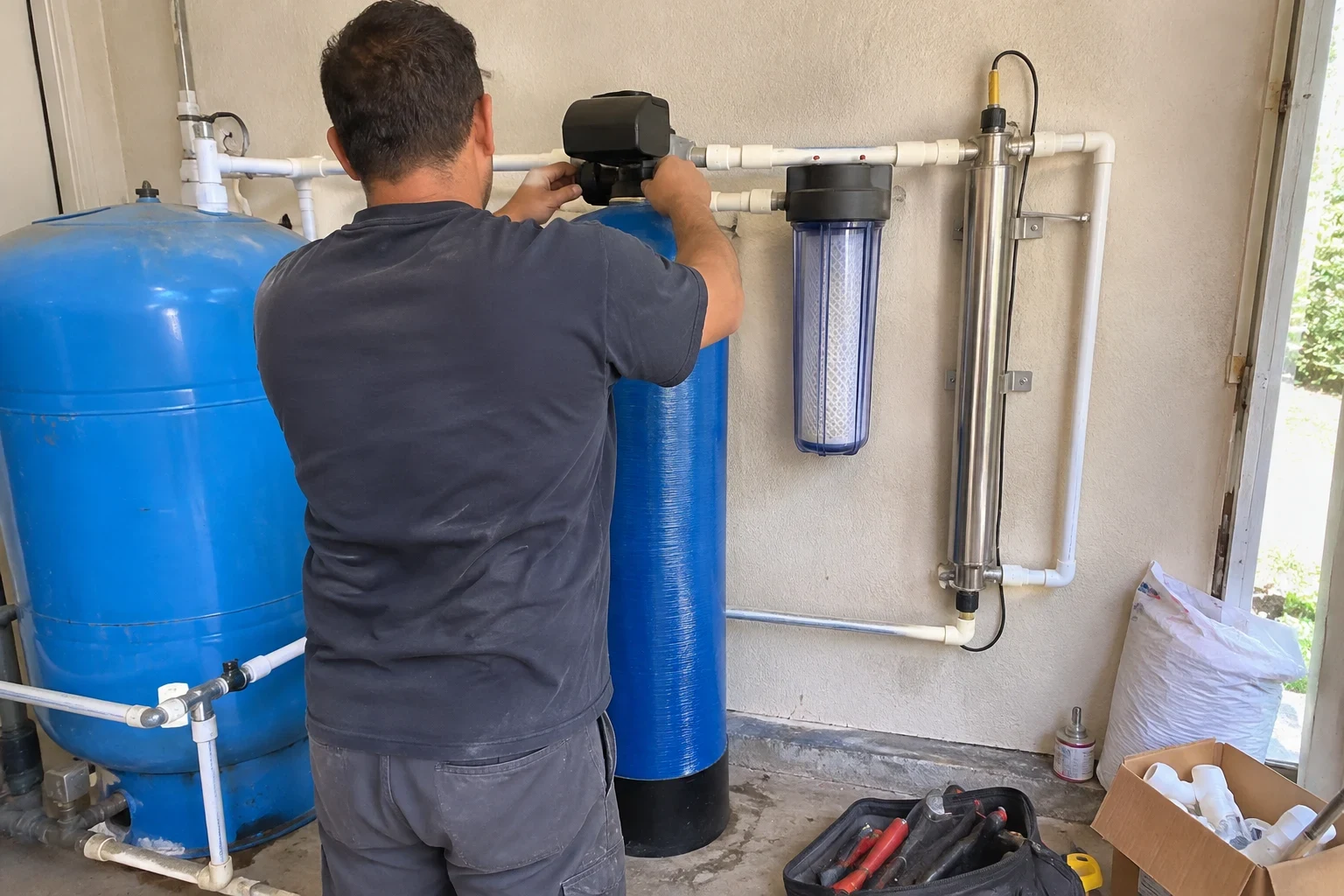
Filtration built for water that comes from the ground
A private well is not like a city line. Nobody treats the water before it reaches you, and what comes up can change with the seasons and the age of the well. Grit wears out valves. Iron leaves orange rings in sinks. A rotten-egg smell can show up in the hot water first.
We look at your well setup, ask what you are seeing and smelling, and build a filter train for that. Usually that means a sediment stage first, then a media tank for iron or odor, with carbon where taste is the issue. If you already have a lab report on your water, have it handy. It helps us pick the right media.
You deal with one person the whole way. The same contact who explains the options is the one who schedules the install and checks the work when it is done.
What the work includes
Checking your pump and pressure tank
Before we pick any equipment, we note the pressure switch setting, the tank and the size of the pipe leaving it. A filter that is undersized for your pump will choke your water pressure.
Sediment filtration
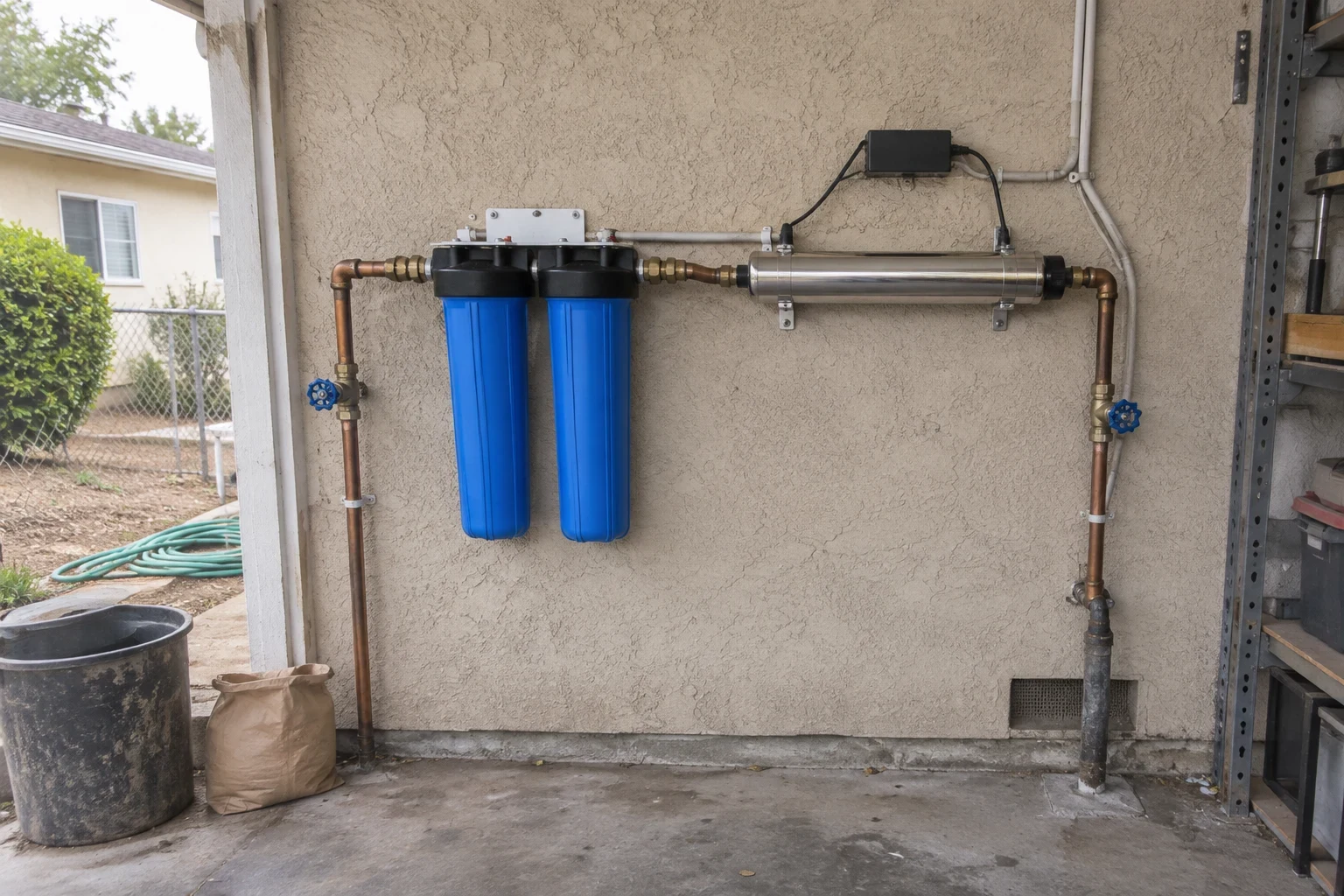
A spin-down or cartridge filter goes in first to stop sand and silt. That keeps grit out of the media tank, your fixtures and your water heater.
Iron and sulfur media tank
When staining or odor is the problem, we add a backwashing tank that holds back iron and sulfur. It rinses itself on a timer and sends the waste out a drain line.
Bypass valve and shutoffs
Each system gets a bypass. If the filters ever need service, you can still run water to the house.
Startup and walkthrough
We flush the system, set the backwash schedule and show you how to swap cartridges. You will know what to check and when.
Signs your well water needs a filter
- Orange or brown stains
- Rust-colored rings in the toilet, tub or laundry usually point to iron. Bleach makes it worse.
- Rotten-egg smell
- A sulfur odor, often strongest in hot water, comes from hydrogen sulfide gas in the well.
- Grit in faucet screens
- If aerators clog with sand or you feel grit in the tub, sediment is getting through. It will wear out valves and appliance parts over time.
- Cloudy water after rain
- Water that turns hazy after a storm or after heavy use can mean the well is pulling in fine silt.
- Metallic taste
- Water that tastes like a penny or leaves a film on coffee often has dissolved iron or manganese in it.
How install day goes
- 1
Phone call and questions
You call, tell us what you are seeing, and we ask about your well, pump and pressure tank. Your contact explains what kind of system fits and why.
- 2
Setting the spot
We pick a spot near the pressure tank with room for the tanks, a drain for backwash and an outlet for the control valve. We put down drop cloths before any pipe gets cut.
- 3
Plumbing it in
The water is shut off at the tank, the line is cut, and the filters go in with a bypass. Most installs take part of one day.
- 4
Flush, set and clean up
We flush the media, run a backwash cycle and check pressure at a faucet. Then we haul away the packaging and old pipe and walk you through the system.
What sets the price
Installation costs you nothing because we cover it. Your price is for the equipment, which depends on what your water needs and how much your pump delivers. Your contact goes through every part with you over the phone so you know exactly what you're getting.
- What your water carries
- Sand by itself only takes a sediment stage. Iron or sulfur needs a media tank, and having both adds stages.
- How much your pump moves
- A larger pump calls for a larger tank, so the filter doesn't drag down your water pressure.
- Room and a drain nearby
- A tank that backwashes needs a drain and power close by. When they're far from the pressure tank, more pipe or wiring may be required.
- The pipes you have now
- If the pipe by the tank is old or corroded, it sometimes needs replacing before the new equipment can be connected.
Well water filtration questions
- Will a filter lower my water pressure?
- Not when it is sized right. We match the tank and port size to the flow your pump puts out. A filter that is too small is the usual reason showers go weak after an install.
- How often do I change the filters?
- Sediment cartridges usually get swapped every few months, and sooner if your well runs sandy. Media tanks backwash on their own and last much longer. We show you how to check both so you are not guessing.
- Where does the backwash water go?
- We send it to a spot that can handle it, like a floor drain or the laundry standpipe. That spot gets settled before any pipe is cut. That way the waste water never ends up somewhere it does not belong.
- Do I need a lab report before you install?
- It helps, but you do not need one. If you have a report, we use it to choose the media. If not, we work from what you tell us and what we see on your faucets and fixtures.
- Can I add drinking water filtration too?
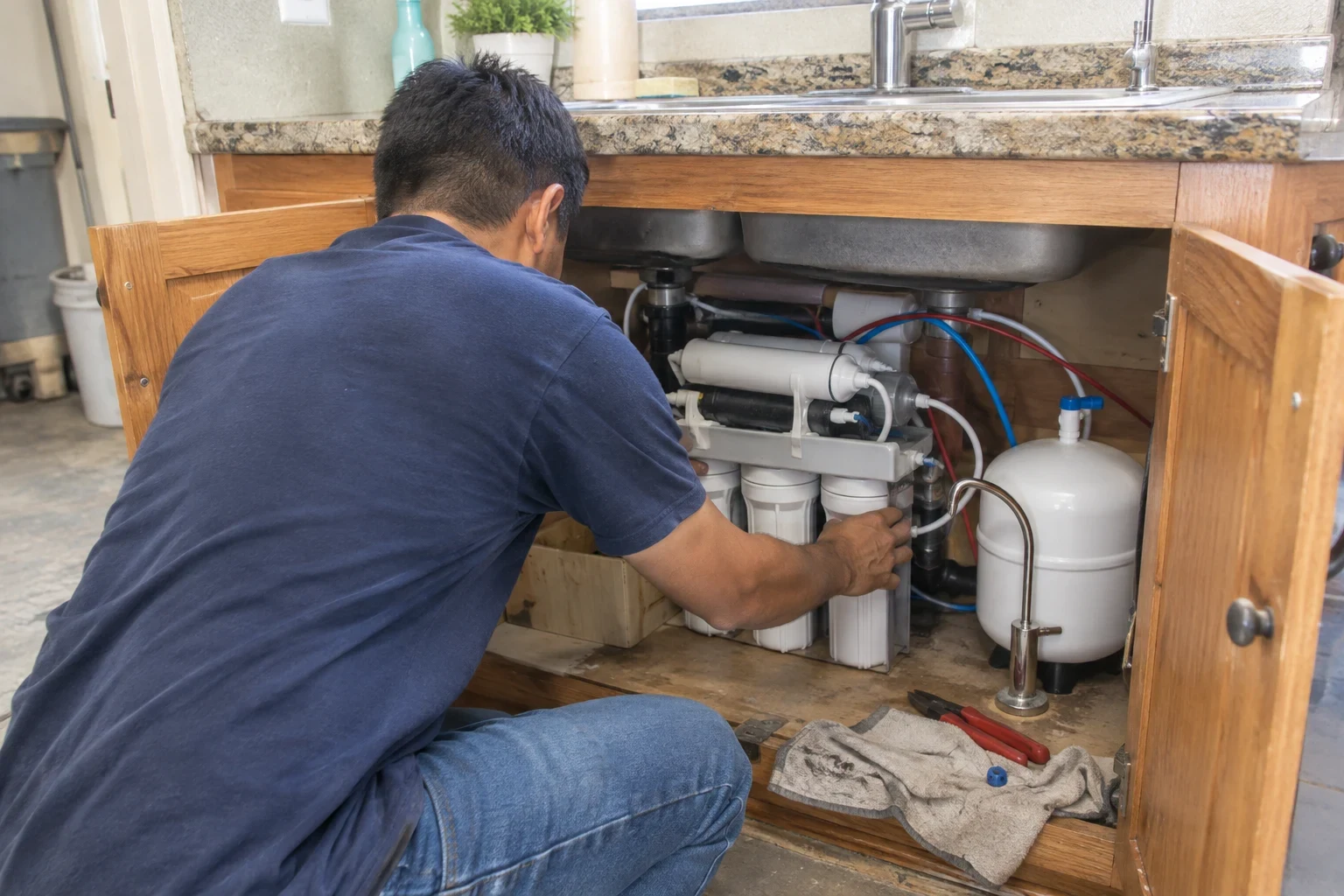
- Yes. A lot of well owners put reverse osmosis at the kitchen sink after the main filters. That gives you an extra stage for the water you drink and cook with.
Ready to clear up your well water?
Tell us what you are seeing at the tap. One person will walk you through the options and set up the install.